
The Fracture
The Three Forces That Broke the Frame Design Thinking Was Built For

The Fracture
In the first installment of this series, I wrote about The Inheritance: what Design Thinking gave us, and why gratitude is not the same as permanence. I called Design Thinking the quiver, the place of origin, the container of supply. I meant it.
But I also said that the quiver is not the flight. And this is where we name what changed.
This is not about a slow decline. It is not about a methodology losing relevance gradually, the way last year’s strategy deck starts to feel slightly out of date. What happened to Design Thinking was structural. Three forces converged, and together they did not merely challenge the framework. They broke the frame it was built inside of.
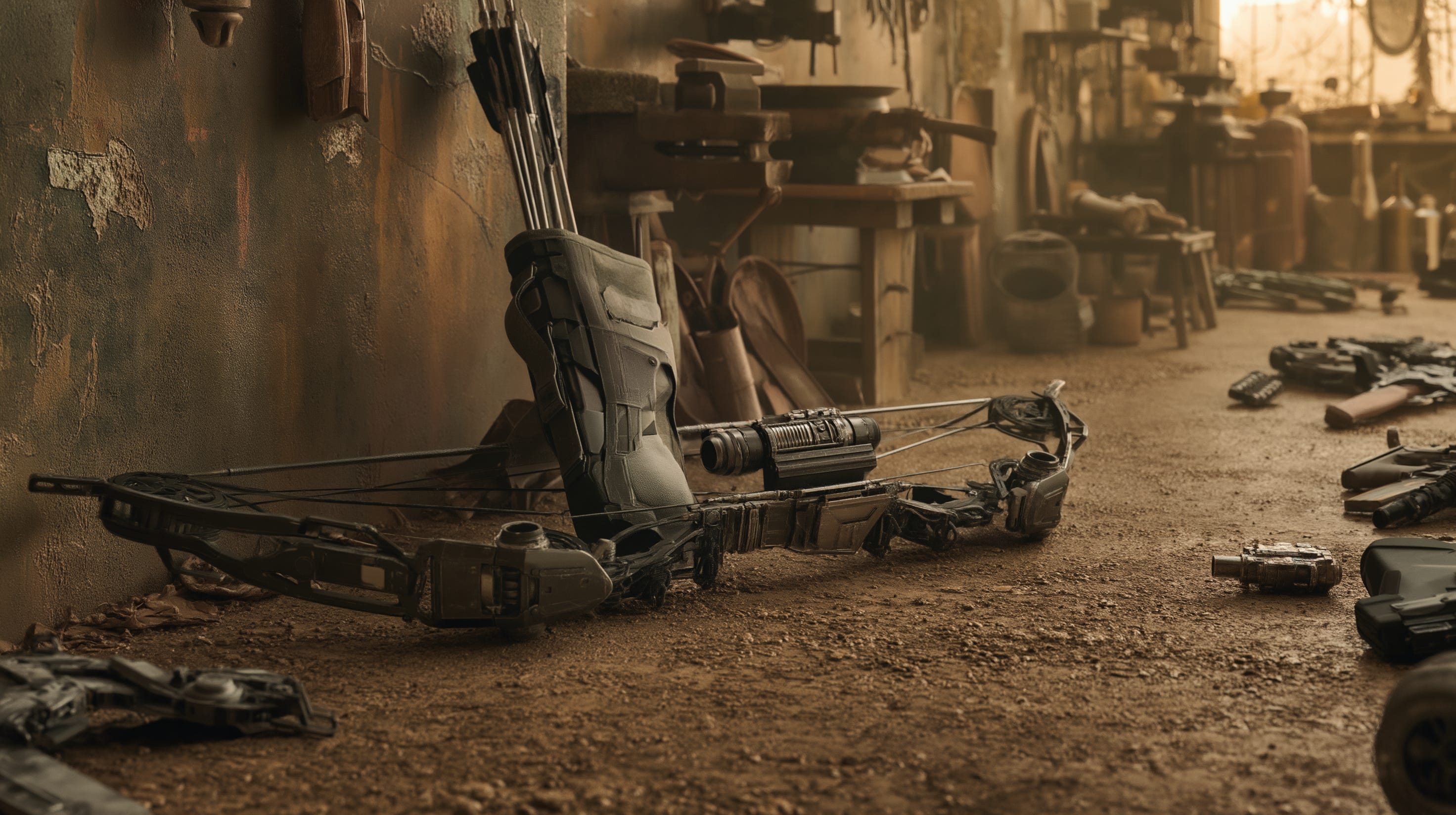
I call this The Fracture. And in the metaphor that guides this series, The Fracture is the bow: the instrument that holds the tension between what was and what must be. The bow does not move forward. It creates the conditions for forward motion. It stores energy through the act of drawing back. And what it demands of the practitioner is this: hold the tension. Do not release too early. Do not let go of the string out of nostalgia or fear.
The three forces I want to name are not theoretical. They are observable. They are happening in real organizations, real institutions, and real practices right now. And any honest practitioner who has been in this work for more than a decade can feel them.
Force One: The Collapse of the Cathedral
Let me start with the most visible signal, because it matters symbolically as much as it matters structurally.
IDEO, the firm that codified Design Thinking, that gave it to the world as a repeatable, teachable process, that built a global consultancy on its promise, has fractured.
Between 2019 and 2023, IDEO’s revenue dropped by more than two-thirds. Its headcount, which stood at over 725 in 2020, fell below 400 after multiple rounds of layoffs. Offices in Munich and Tokyo were shuttered. In 2025, the firm brought in its fourth CEO in six years, a former partner tasked with demonstrating that IDEO’s core capabilities were still relevant in a world that had largely absorbed its methodology and moved on.
The most honest reading of IDEO’s trajectory is not that Design Thinking died. It is that Design Thinking succeeded so thoroughly that it commoditized itself.
I do not say this to diminish IDEO. I say it because the cathedral matters. When the institution most associated with a methodology begins to contract at that scale, it is not just a business story. It is a signal about the methodology’s relationship to the market it once defined.
The most honest reading of IDEO’s trajectory is not that Design Thinking died. It is that Design Thinking succeeded so thoroughly that it commoditized itself. Organizations learned the process, built internal teams, and no longer needed the high-cost external facilitators who had taught them. That is, in a strange way, the highest compliment a methodology can receive: you made yourself unnecessary.
But there is a deeper fracture underneath the business story. IDEO’s contraction coincided precisely with the rise of generative AI, and the firm’s response has been telling. Its educational arm, IDEO U, now frames AI as a tool that “enhances” Design Thinking, a way to “combine AI and creativity to amplify your problem-solving skills.” The language is additive. It is not transformative. It assumes the frame still holds and that AI simply makes the existing process faster or broader.
This is the bolt-on fallacy. And it is everywhere.
Force Two: The Bolt-On Fallacy
Stanford’s d.school, the institutional home of Design Thinking in higher education, is updating its flagship Design Thinking Bootcamp to incorporate AI elements. The Hasso Plattner Institute, which funds the d.school and carries the Design Thinking mantle into European education, recently announced a collaborative hub with MIT focused on AI and creativity.
On the surface, these are smart moves. Institutions adapting to the moment. But look closer at the language and the structure, and a pattern emerges: AI is being grafted onto Design Thinking as a feature, not reckoned with as a force.
But they are being made from inside the quiver. The frame itself, the five-step process, the human-centered solutioning loop, the assumption that the designer is the primary creative agent, remains unquestioned.
The d.school’s own faculty sense the tension. One wrote in late 2025 that we risk mistaking tool proficiency for creative facility, and that most AI literacy efforts focus on prompt writing rather than something more foundational. Another warned that people are using AI largely to replicate and automate things that have already been done.
These are the right observations. But they are being made from inside the quiver. The frame itself, the five-step process, the human-centered solutioning loop, the assumption that the designer is the primary creative agent, remains unquestioned. AI gets added as a new tool in the toolkit. The toolkit itself is never reopened.
Here is why this matters: empirical research is beginning to show that adding AI to the Design Thinking process, as currently structured, can actually undermine the thing Design Thinking is supposed to do best.
A 2024 study presented at CHI (the premier conference in human-computer interaction) found that when participants used an AI image generator during ideation, a core Design Thinking activity, they produced fewer ideas, with less variety and lower originality compared to participants working without AI. The AI did not expand divergent thinking. It constrained it. Participants anchored on the AI’s outputs rather than generating their own.
Read that again. The empirical evidence suggests that bolting AI onto the ideation phase of Design Thinking can make Design Thinking worse at the thing it was specifically designed to do.
This is not an argument against AI in creative processes. It is an argument against treating AI as an add-on to a process that was never architected for non-human creative agents. The frame has to change. Bolting new tools onto old frameworks is not evolution. It is denial dressed as adaptation.
Force Three: The Agency Crisis
The third force is the most important, and the most dangerous, because it is the quietest.
Organizations across every sector are making decisions right now about the relationship between human creativity and machine capability. And most of them are making those decisions badly, not out of malice, but out of a lack of framework.
The dominant responses fall into two categories, and both are failures.
The first is full automation: the assumption that if AI can generate, it should generate, and that human involvement is an inefficiency to be engineered out. This is the path of displacement. It treats creativity as a task to be optimized rather than a capacity to be preserved.
The second is performative oversight: the “human in the loop” theater that has become the default governance posture for organizations deploying AI. A human reviews the output. A human signs off. A human is “involved.” But involvement is not the same as agency. In practice, most human-in-the-loop implementations are rubber stamps, compliance gestures that satisfy regulators and reassure boards while doing nothing to preserve the human’s actual creative authority in the process.
One commentator described this bluntly: when oversight is treated as a checkbox rather than a genuine operating principle, it collapses into theater.
Design Thinking has no answer for this crisis. Not because it is a bad framework, but because it was never designed to address the question of how humans and machines share creative authority. DT was built for a world where humans were the only ones in the room. It centered the human not as a philosophical commitment (though it was that) but as a structural assumption: the designer empathizes, the designer defines, the designer ideates, the designer prototypes, the designer tests.
What happens when the machine can do four of those five things?
The answer is not to protect the process. The answer is to redesign the relationship.
What the Bow Demands
This is the tension. The bow drawn back, holding the energy of thirty years of practice, the weight of a methodology that shaped a generation of innovators, and the honest recognition that the world it was built for no longer exists.
The bow demands that we hold this tension without collapsing in either direction. Not back into nostalgia for the way DT used to work. Not forward into uncritical embrace of whatever AI offers. The bow demands that we ask a harder question: What does intentional partnership between human creativity and machine intelligence actually look like, in practice, in organizations, in real work?
Design Thinking cannot answer that question. It was not built to. And the institutions that carry its legacy, from Stanford to IDEO to the thousands of enterprise innovation labs that adopted its language, are demonstrating through their actions that they sense this but do not yet know what comes next.
I do.
Not because I am smarter than the people at the d.school or IDEO. But because I have been holding this bow for longer than most, and I have felt the moment when the tension demands release.
In the final installment of this series, I will name what the arrow is: the Symbiotic Innovation Model. Not a replacement born of impatience, but an evolution born of practice, observation, and a conviction that has only deepened with three decades of doing this work.
Human creativity is both sacred and strategic. Preserving it in the age of machines is not optional. And it requires more than a bolt-on.
The arrow is ready.
Vincent Hunt is the Founder & CEO of the Bureau of Creative Intelligence, a consultancy focused on the relationship between technology, human creativity, and the future. His work centers on the Symbiotic Innovation Model (SIM), a philosophy and practice for accelerating innovation while preserving human agency in the age of machines.
This is the second installment of The Quiver, The Bow, and The Arrow, a series on the evolution from Design Thinking to Symbiotic Innovation.
Read Part I: The Inheritance Learn more at bureauofcreativeintel.com